
Legislation on Single Use Plastics in force
The European Commission has the ambition to make the EU ‘climate neutral’ by 2050 or sooner. Part of this ambition is to tackle the problem of marine litter (plastic soup) in the form of disposed single use plastics and fishing gear. The EU has adopted Directive (EU) 2019/904 (link), which entered into force on 2 July 2019.
The obligations of Articles 4, 5, 7 including the mandatory markings apply per 3 July 2021.
Three groups of single-use plastic (SUP) products are regulated by Directive (EU) 2019/904:
- Single-use plastics; products intended to be used only once and that are not refilled or re-used.
- Oxo-degradable plastics include additives that are fragmented into small parts through oxidation.
- Fishing gear.
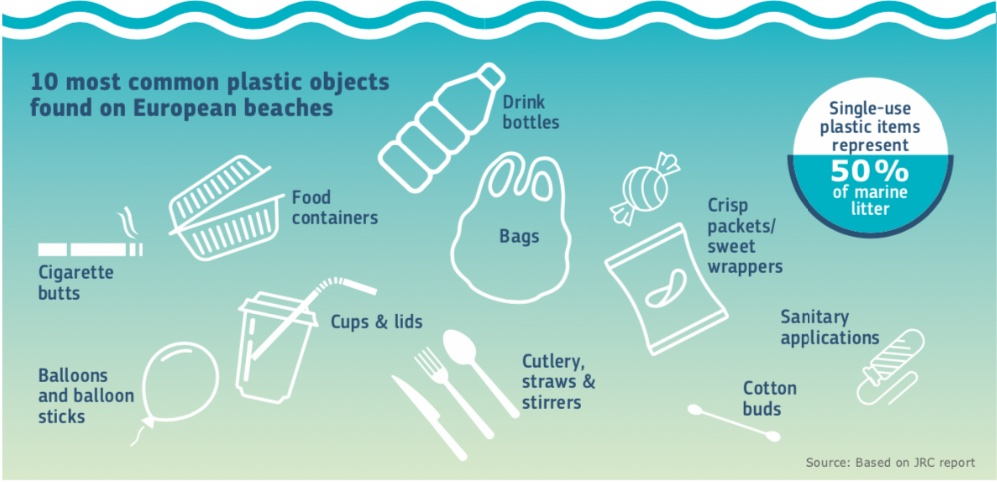
Copyright of image: Luxembourg, European Union, Publications Office of the European Union, 2018
Prevention, reduction, bans, restrictions, EPR and costs
The SUP Directive describes the following series of measures for single use or disposable plastics:
- Article 4 and part A of the Annex: an “ambitious” reduction in the consumption of single use plastic beverage cups and food containers.
- Article 5 and part B of the Annex: prohibit products made from oxo-degradable plastic and ban the following single use plastic products: cotton bud sticks, cutlery, plates, straws, stirrers, stirrers, balloon sticks and expanded polystyrene (EPS) food containers, beverage containers and cups, covers and lids.
- Article 6(1) and part C of the Annex: caps and lids shall remain attached to plastic bottles (max. 3 litres) during use.
- Article 6(5) and part F of the Annex: a minimum percentage of recycled plastics is defined for polyethylene terephthalate (PET) bottles with maximum capacity of 3 litres.
- Article 8 and part E of the Annex: extended producer responsibility (EPR) schemes are established for food containers, boxes, packets and wrappers; beverage bottles, cups, caps and lids; lightweight plastic carrier bags; wet wipes; balloons; cigarette filters and fishing gear. Producers will cover the costs of awareness raising measures (Article 10) and ALL costs of waste collection and treatment.
- Article 9 and part F: sets collection targets for waste beverage bottles (max. 3 litres).
Mandatory markings
Article 7 and part D of the Annex introduces marking requirements for the following SUP products:
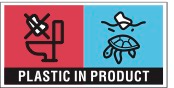
- Sanitary towels (pads)
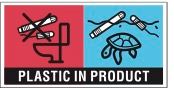
- Tampons and tampon applicators;
- Wet wipes for personal care and domestic wipes;
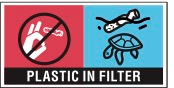
- Tobacco products with filters and separately sold filters;
- Cups for beverages.
Regulation (EU) 2020/2151 (link) specifies the markings to be used from 3 July 2021.
The information text of the marking shall be written in the official language or languages of the Member State(s) where the single-use plastic product is placed on the market.
For sanitary towels and for wet wipes:
For tampons and tampon applicators:
For filter cigarettes and filters:
For beverage cups:
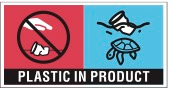
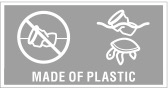
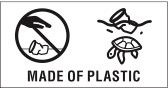
The pictograms in vectorised format and available in all EU languages can be downloaded here:
https://ec.europa.eu/environment/topics/plastics/single-use-plastics/sups-marking-specifications_en.
