
The battery collection schemes in the EU Member States
How have Member States implemented Battery Directive 2006/66/EC of 6 September 2006 on (waste) batteries and accumulators and what are the consequences for producers, importers and retailers?
Objectives
The main objective of the Battery Directive is to minimise the negative impact of (waste) batteries on the environment.
In addition the Battery Directive sets requirements concerning the heavy metal content of batteries and it introduces obligations for the labelling of batteries.
Collection
For most EU Member States the minimum achieved collection rates will be raised to 45% per 26 September 2016. Therefore Member States have tightened the obligations for producers of batteries.
The national implementations include the following:
- Make sure consumers can discard waste batteries at a collection point in their vicinity;
- Require distributors to take back waste batteries at no charge;
- Do not charge anything to consumers;
- Do not allow any obligation to buy a new battery.
The battery collection schemes may be combined with the collection schemes for electrical and electronic equipment (WEEE directive).
Financing
The collection and recycling of batteries requires financing.
Article 16 of the Battery Directive states that battery producers must finance the collection, treatment and recycling of all waste batteries and the costs for public information campaigns.
‘Producer’
‘Producer’ means any person in a Member State that places batteries, including those incorporated into appliances or vehicles, on the market for the first time within that Member State on a professional basis.
The EU has published answers to the Frequently Asked Questions about the obligations of the Battery Directive. The FAQ gives examples on “who is the producer” in several scenarios, for instance these two cases:
- A battery manufacturer or importer in an EU Member State sells batteries to a retailer who in turn sells them to customers in that Member State. In this case, the battery manufacturer or the importer is the ‘producer’ in that Member State, as they are placing the batteries on the market for the first time in that Member State.
- A retailer sells batteries in a particular EU Member State, but he bought those batteries in a different country. In this case, as the retailer is placing these batteries on the market in this EU Member State for the first time, the retailer is the ‘producer’.
Registration
To avoid ‘free-riders” (producers that do not pay) each EU Member State keeps registers of producers who place batteries on their national market. Consequently registration needs to be done by producers in every Member State where they sell batteries.
Registration can be done individually or producers can join collective schemes to fulfil their obligations. The table on the next page shows a (non exhaustive) overview of organisations that may assist in the fulfilment of the producer’s obligations.
Marking
Consumers are informed about the collection and recycling with the “Crossed-out wheeled bin” symbol on batteries:
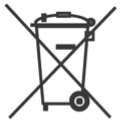
Refer to ProductIP’s Compliance Clip 587 for more details.
The following organisations provide information on battery collection and recycling solutions in that Member State (non exhaustive list):
|
Country |
Links |
|
Austria |
|
|
Belgium |
|
|
Bulgaria |
|
|
Croatia |
|
|
Cyprus |
|
|
Czech Rep. |
|
|
Denmark |
|
|
Estonia |
|
|
Finland |
|
|
France |
|
|
Germany |
|
|
Greece |
|
|
Hungary |
|
|
Iceland |
|
|
Ireland |
|
|
Italy |
|
|
Latvia |
|
|
Lithuania |
|
|
Luxembourg |
|
|
Malta |
|
|
Netherlands |
|
|
Norway |
|
|
Poland |
|
|
Portugal |
|
|
Romania |
|
|
Slovakia |
|
|
Slovenia |
|
|
Spain |
|
|
Sweden |
|
|
Switzerland |
|
|
Turkey |
|
|
UK |
