
Hundreds of chemical accidents with children every year
Hundreds of incidents occur yearly where children are harmed after contact with dangerous chemicals.
According to national poison centres these accidents happen frequently with household chemical products that require child-resistant fastenings. Adequate child-resistant fastenings avoid access to chemicals for young children but there is a high non-compliance rate with regard to this mandatory, precautionary measures.
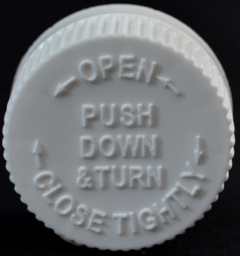
What is a child-resistant fastening?
A child-resistant package consists of a container (bottle, can) and a child-resistant fastening (cap, closure) which is difficult to open for young children under the age of 52 months, but which is not difficult for adults to use properly.
Both non-reclosable and reclosable packages can be child-resistant.
Which chemicals require a child-resistant fastening?
Child-resistant fastenings are mandatory for the following three groups of chemicals:
- Consumer products containing methanol (EC 200-659-6) in a concentration ≥ 3%;
- Consumer products containing dichloromethane (EC 200-838-9) in a concentration ≥ 1%;
- Chemicals supplied to the general public with one of the following CLP classifications:
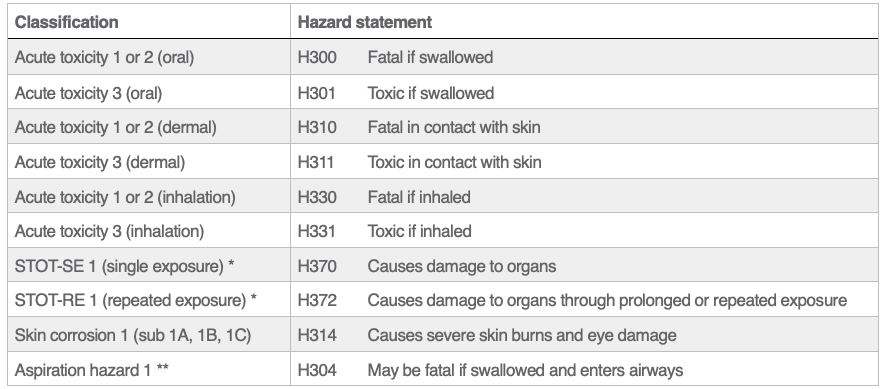
* STOT: Single Target Organ Toxicity.
** With the exception of packages in the form of aerosols or in a container fitted with a sealed spray attachment .
Where is the classification of chemicals stated?
Possible classifications are defined in “CLP” Regulation (EC) 1272/2008. This EU Regulation on hazardous chemical mixtures and substances provides the criteria for Classification, and the rules on Labelling and Packaging (CLP).
Section 3.1 of Annex II of the CLP Regulation is related to child-resistant fastenings.
The classification of each chemical mixture or substance shall be stated in Section 2.1 of its Safety Data Sheet (SDS).
Are there standards available?
Yes, the CLP Regulation (EC) 1272/2008 refers to the following standards:
- EN ISO 8317 “Child-resistant packaging – Requirements and testing procedures for reclosable packages”
- EN 862 “Packaging – Child-resistant packaging – Requirements and testing procedures for non-reclosable packages for non-pharmaceutical products”
Conformity with these standards may only be certified by EN ISO/IEC 17025 accredited laboratories.
If it seems obvious that packaging is sufficiently safe for children because they cannot get access to the contents without the help of a tool, the above tests on non-reclosable and reclosable packages do not need to be performed.
The applicable standard for child-resistant non-reclosable packaging for pharmaceuticals is EN 14375.
ECHA, the European Chemical Agency, provides provides full Guidance on Regulation (EC) 1272/2008.
What to do in case of a chemical accident
If a child is exposed to a chemical substance: Immediately call a doctor or poison center and have the packaging with label at hand. Describe the chemical product clearly. In the future the label will contain a UFI code; a unique identifier and barcode that is recognised by the poison centres, medics and physicians.
