
Limits and warnings to protect consumers and children against excessive sound levels
Listeners risk permanent hearing loss if they use their personal music player for more than 40 hours per week at high volume settings for at least five years.
To make sure that only safe products are placed on the market, sound level limits are applicable to portable, personal music players with headphones or earphones.
EU Decision 2009/490/EC and harmonised standards
Battery-powered portable music players without communication functionality fall into the scope of the General Product Safety Directive (GPSD) because these products are outside the scopes of the Low Voltage Directive or R&TTE Directive.
Sound limits for these products came into effect in June 2009 after the publication of GPSD Decision 2009/490/EC.
And Official Journal of 28 February 2012 harmonised the related amendments EN 60065/A12:2011 and EN 60950-1/A12:2011 per 24 January 2013.
Limits and warnings
A sound level of less than 80 dBA is considered safe for an exposure time of 40 hours per week. But most persons do not listen 40 hours per week to their personal music player. And considering the average level of most modern music a value of 85 dBA is considered to be safe for the majority of the users of personal music players.
Personal music players shall provide adequate warnings on the risks in using the device and ways of avoiding them and information to users in cases where exposure poses a risk of hearing damage.
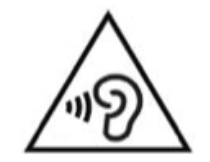
Refer to EN 60065 and EN 60950-1 for all details on limits and warnings.
Additional requirements for toys
Per 30 September 2014 the amendment EN 71-1:2011/A2:2013 will be mandatory.
For equipment that is clearly designed or intended for use by young children, the sound level limits and warnings of EN 71-1:2011 apply.
Amendment A2 includes limits for eleven different toy types that require testing:
• close-to-the-ear toys,
• table-top or floor toys,
• hand-held toys,
• toys using headphones or earphones,
• rattles,
• squeeze toys,
• pull-along or push toys,
• percussion toys,
• wind toys,
• cap-firing toys,
• voice toys.
The amendment also changes test methods and defines new exposure times. The acoustic limits are dependent on the exposure times:
• less than 5 seconds,
• between 5 and 30 seconds,
• more than 30 seconds.
